Home › Speed Bumps, Curbs, and Asphalt Accessories
Control traffic safely with speed bump installation in Raleigh, NC. We install asphalt speed humps, curbing, and parking lot accessories that slow vehicles and guide drivers. Thoughtful layout and quality construction help protect pedestrians, buildings, and parked cars on your property.
Precision Asphalt Raleigh provides professional speed bump installation throughout Raleigh, NC, North Carolina and the surrounding area. Our licensed, insured crew delivers safe, clean, on-time work with a free estimate before anything begins. Call (984) 254-6287 or request your free quote.
Speed bump installation and asphalt accessories in Raleigh
Speed bumps, curbs, and related asphalt accessories look simple from the outside, but they only work well if they are designed and built for your specific property. At Precision Asphalt Raleigh, we help property owners across Raleigh and the Triangle figure out exactly where they need traffic calming, what style of speed bump or curb fits the site, and how to install it so it lasts through hot summers and winter freeze-thaw cycles.
Our work starts with a site visit. We walk your parking lot or private drive, watch how vehicles move, look at grades and drainage patterns, and note any tight turns, blind spots, or pedestrian routes. From there, we recommend specific locations and spacing for speed bumps, whether you need full-width bumps, speed humps, or shorter bump sections in select lanes. For curbs and other asphalt accessories, we pay attention to how water flows and where vehicles actually drive so the installations control traffic without creating new maintenance problems.
How we install speed bumps, humps, and curbs
On a typical speed bump installation, the first step is layout. We measure and mark the bump location with paint, set the width across the drive aisle, and confirm that emergency vehicles can still pass at a safe speed. In many Raleigh lots we align bumps with crosswalks or building entrances to slow vehicles exactly where pedestrians cross.
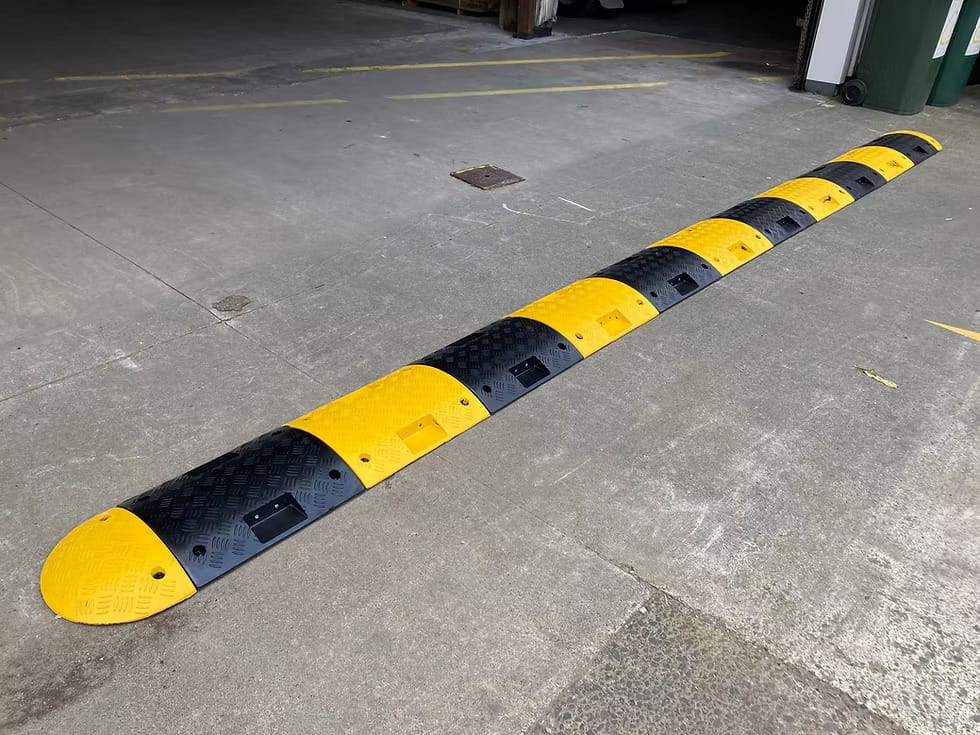
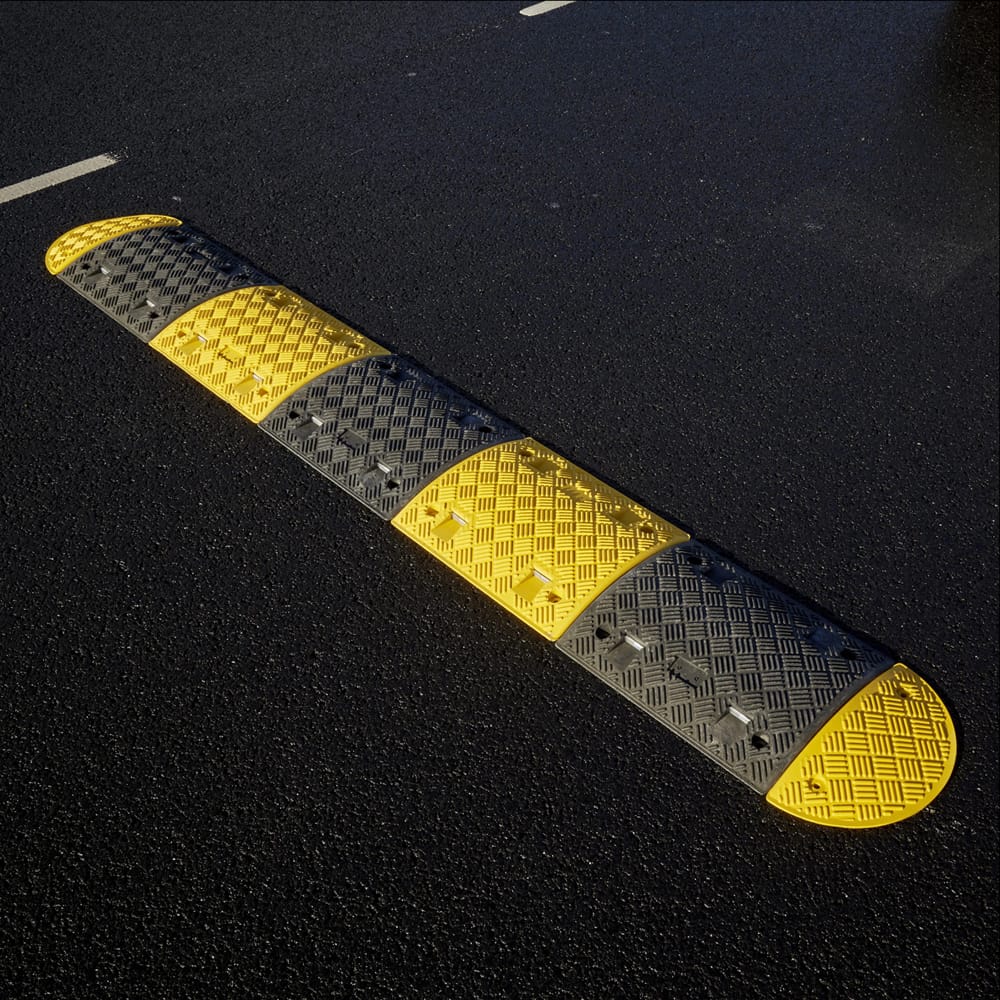
Next, we saw cut or grind the existing asphalt if needed to tie the new work in cleanly. For asphalt speed bumps we roughen the surface, tack coat it for bonding, then place a compacted asphalt wedge using hot mix that matches your existing pavement. For pre-formed rubber speed bumps, we drill into the base asphalt and anchor the sections with rebar or heavy-duty lag bolts so they do not creep or loosen in summer heat.
Curbs are handled a little differently. For concrete curbs, we excavate a trench, place and compact a stone base, set forms, install rebar where needed, then pour and finish the concrete to the specified profile. For asphalt curbing, often called extruded curb, we clean the pavement, apply tack, then run a curbing machine that forms a continuous curb in one pass. In both cases, we cut control joints and address transitions at handicap ramps and entrances so there are no sharp edges or trip points.
Throughout the process, our crew checks slope and drainage. A badly placed bump or curb will trap water. In the Raleigh climate, that standing water breaks down asphalt quickly and can freeze in winter, so we aim water toward existing catch basins or adjust the bump profile so runoff still moves.
Material options, design choices, and what fits Raleigh properties
Not every property in Raleigh needs the same type of speed bump installation. For apartment communities and office parks that want a more gradual feel, we often suggest speed humps that are longer from front to back. They slow traffic to around 15 to 20 mph without the harsh jolt that shorter bumps create. In tight lots, around dumpsters, or at drive-through lanes, shorter, higher bumps or raised asphalt pads can be more effective.
You can choose between permanent asphalt bumps, removable rubber or plastic units, and hybrid setups where we saw cut a shallow asphalt table and fasten modular sections on top. Asphalt is best if you want a smooth look that matches your lot and can be re-striped over time. Rubber or plastic is useful near schools, churches, or seasonal venues where you might want to remove a bump later or replace individual sections instead of re-paving.
Curb styles also vary. Wheel stops, sometimes called parking bumpers, can be concrete or recycled rubber. Concrete is heavy and durable but can chip if drivers hit them hard. Rubber flexes more, which can be easier on vehicles and is often preferred in retail and medical office parking. Continuous curbing, either concrete or asphalt, is better when you want to separate traffic lanes from sidewalks or landscaped islands, or keep vehicles out of drainage swales.
Because Raleigh sees hot summers and occasional ice, we talk through color and coating options too. Light-colored curbs and high-contrast bump striping make features stand out in bright sun and under parking lot lights. We typically use thermoplastic or high-solids traffic paint with glass beads for reflectivity so drivers and pedestrians can see the features in heavy rain or at night.
Costs, timeline, and common problems to avoid
Speed bump installation costs in Raleigh depend on several concrete factors: how many bumps you need, their length and profile, whether we are using asphalt or modular rubber, and how much prep work is required on your existing pavement. Longer humps with full-width asphalt placement cost more than a few short rubber sections, but they also tend to look better and integrate with future resurfacing. Curbs add cost based on linear feet, the need for excavation or base stone, and whether you choose concrete or asphalt.
During our estimate, Precision Asphalt Raleigh gives you a clear breakdown of unit costs and any line items for drainage work, patching failed asphalt before installation, or re-striping after the work. That way you can compare options for different sections of your property. For example, we might recommend durable concrete wheel stops in long-term employee parking, and rubber stops near customer-facing spaces where replacing a damaged unit quickly is important.
Common problems we see on properties that used the lowest bidder include bumps that are too high or too steep, which leads to complaints, vehicle damage claims, and sometimes forced removal. We follow accepted traffic calming guidelines for height and spacing and coordinate with your property manager or HOA board so the layout makes sense. Another issue is bumps or curbs that are installed directly over failing asphalt. When the base pavement breaks up, the bump cracks and pieces come loose. We test the existing surface, recommend patching if needed, and refuse to build on obviously unsound pavement.
Raleigh weather adds one more factor. In summer, rubber products can expand and curl if they are not properly anchored. In winter, water that collects along the uphill side of a bump can freeze and pop the asphalt. To avoid that, we ensure full contact between modular products and the pavement, use corrosion-resistant hardware, and shape asphalt transitions so water sheds away from the bump.
Planning, permits, and working around your tenants or customers
Before installing speed bumps, curbs, or other asphalt accessories, there are a few planning steps that save headaches. On private property inside the city limits, Raleigh or Wake County may require that fire lanes and access routes stay clear to meet emergency vehicle requirements. Precision Asphalt Raleigh can layout bumps that slow traffic without blocking fire lane markings or hydrant zones. For larger commercial sites or new developments, we can coordinate with your civil engineer or refer you to one if a stamped plan is needed.
We also look at how your business or community actually uses the space. For shopping centers, we often schedule speed bump installation in early morning or overnight so storefront access stays open. In apartment complexes, we send notices and set up clear barricades and cones so residents know where to park and which drive lanes are affected. Most bump and curb installations can be driven on within a few hours if asphalt is used, and within 24 hours for concrete work, depending on temperature.
For HOAs and property managers, we can phase the work. For example, we might install speed humps near the entrance and clubhouse first, then return for interior streets once everyone is used to the new pattern. We also offer repainting and remarking services, including new yield bars, crosswalks, and arrows, so the new features are supported by clear striping.
If you are not sure what traffic calming your property really needs, we start small. We can install a limited number of bumps, add or upgrade curbing at known problem spots like dumpster enclosures or corners that get clipped, then monitor results. From there, we adjust layout or add accessories like signage or wheel stops until speeds, parking behavior, and pedestrian safety match what you are aiming for.