Home › Road, Street, and Municipal Paving
Support your community with reliable road paving in Raleigh, NC. We construct and resurface streets, subdivision roads, and municipal routes with quality asphalt. Our crews handle everything from grading and drainage to final compaction so your roads are smooth, safe, and built to specification.
Precision Asphalt Raleigh provides professional road paving throughout Raleigh, NC, North Carolina and the surrounding area. Our licensed, insured crew delivers safe, clean, on-time work with a free estimate before anything begins. Call (984) 254-6287 or request your free quote.
Road, Street, and Municipal Paving in Raleigh, NC
Road paving in Raleigh is not just about laying asphalt. It is about building safe, smooth routes that hold up to heat, storms, school traffic, and daily commuters. Precision Asphalt Raleigh focuses on roads, streets, and municipal paving projects that serve neighborhoods, businesses, and public agencies across Wake County.
We understand that every road segment has a purpose. A city collector street, a rural connector, and a subdivision entrance all carry different traffic loads and have different safety needs. Before any work starts, our team walks the route, notes drainage issues, measures existing pavement thickness, and reviews traffic patterns. This local, on-the-ground assessment is what shapes the design, material choices, and construction schedule.
From resurfacing a small city block to rebuilding a multi-lane corridor, Precision Asphalt Raleigh coordinates closely with local officials, HOAs, and property owners to limit disruptions. We plan staging, detours, and signage so emergency vehicles, school buses, and deliveries can keep moving while work is underway. Our focus is on practical solutions that fit how people in Raleigh actually use the roads every day.
How We Design a Durable Road for Raleigh Traffic and Weather
Successful road paving starts with design. In Raleigh, that means matching pavement structure to heavy summer heat, freeze-thaw cycles in winter, and frequent rain. Precision Asphalt Raleigh starts with traffic counts (or projected use), the percentage of heavy trucks or buses, and the existing soil and base conditions.
Based on that, we specify a pavement section that typically includes a compacted stone base, a structural asphalt base course, and a smoother surface course. Heavier truck routes may require thicker base and binder layers, or a stiffer asphalt mix with higher quality aggregates. Neighborhood streets with slower speeds usually get a fine-graded surface mix for a quieter ride and better appearance.
Local drainage is a major design factor. Raleigh’s summer storms can quickly flood low spots, which weakens subgrade and causes early cracking and potholes. We adjust road crown (the cross slope), add or regrade ditches and swales, and reset inlets so water moves off the pavement quickly. In areas with clay-heavy soils, we often recommend undercutting soft subgrade and replacing it with crushed stone or a stabilized base so the pavement does not pump and rut over time.
Our Road Paving Process, Step by Step
Every road, street, and municipal paving project follows a clear sequence so the finished pavement is strong and uniform from bottom to top.
First, we handle preparation and demolition. This may mean milling off existing asphalt to a set depth, full-depth reclamation of failed sections, or complete removal down to soil. We then proof-roll the exposed subgrade to identify soft areas, which are undercut and replaced with stone or stabilized material.
Next, we build or repair the base course. Crushed stone is placed and compacted in lifts using vibratory rollers. Proper compaction is critical, so we verify density with field testing tools, not just by eye. On projects that require it, we install geotextile fabric between soil and stone to separate fine soils from the aggregate.
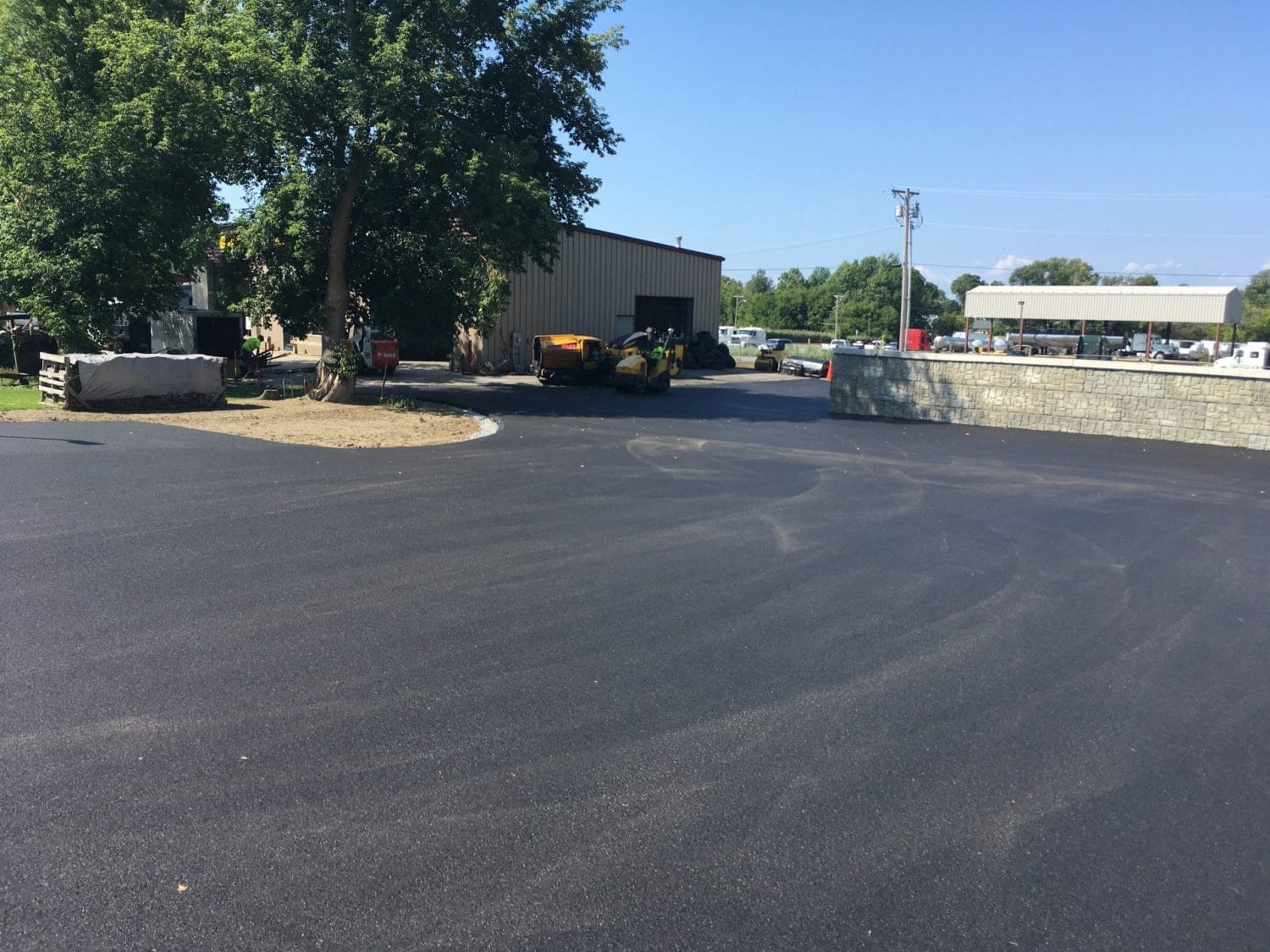
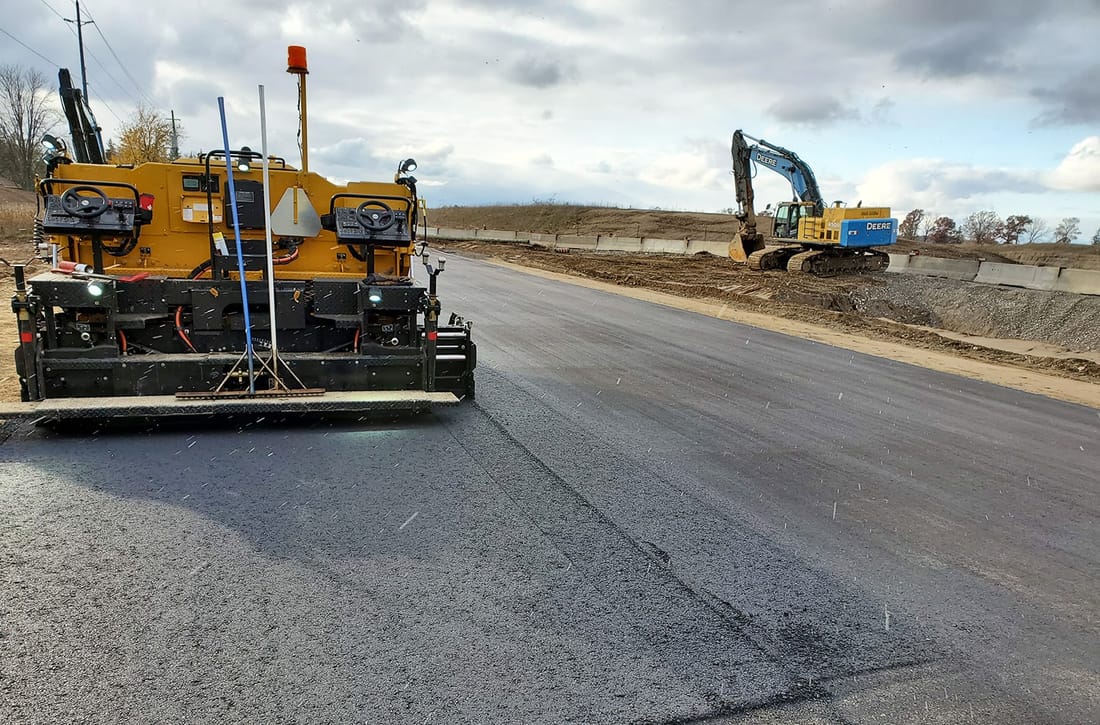
After the base comes the asphalt layers. A tack coat is applied between each asphalt lift to bond layers together. We place the base or binder course first, then the surface course. Each lift is spread with a paver to the designed thickness and cross slope, then compacted immediately with steel-wheel and pneumatic rollers while the mix is still at the proper temperature.
Throughout the process, our supervisors check smoothness with straightedges, confirm thickness, and watch transverse and longitudinal joints carefully. Smooth, tight joints and even compaction are what keep Raleigh roads from unraveling or raveling at the seams in just a few years.
Material Options and Mix Designs for Local Roads
Not every road in Raleigh needs the same asphalt mix. Precision Asphalt Raleigh works with local plants to specify mixes that match each street’s purpose and the city’s standards.
For collector and arterial streets, we often use a dense-graded surface mix with high quality angular aggregates for skid resistance and durability. On lower speed neighborhood streets, we can select a slightly finer mix that still performs well but offers a smoother, quieter ride. On roads with slow turning traffic, such as at intersections, we adjust the mix for better rut resistance.
In some cases, especially where resurfacing over older pavement, we use leveling or “scratch” courses to correct rutting and uneven profiles before the final surface is applied. For municipal projects that emphasize sustainability, we can incorporate reclaimed asphalt pavement (RAP) within the limits of performance and local specifications.
We also discuss asphalt binder grades that handle local temperature ranges. Raleigh heat can soften weaker binders, which leads to rutting, and colder winter nights can cause brittle cracking in under-designed mixes. Choosing the correct performance grade binder reduces these risks and extends the life cycle of the pavement.
What Drives Road Paving Cost in Raleigh
Road paving budgets depend on more than just square footage. When Precision Asphalt Raleigh prepares a proposal, we break down the factors so decision makers and community members understand where the money goes.
Existing conditions are often the biggest cost driver. A street that only needs milling and an overlay is much less expensive than one that requires full-depth reconstruction, undercutting, or extensive base replacement. Drainage improvements, curb repairs, and utility adjustments also affect total cost.
Pavement thickness and traffic loading matter too. Heavier traffic routes and bus corridors need more structural asphalt and base, which directly increases material and trucking costs. Access challenges, such as tight residential streets or limited staging areas, can add labor and equipment time.
Scheduling is another factor. Night work, off-peak paving schedules near schools or hospitals, and strict lane closure windows add complexity and cost. We work with cities, HOAs, and private owners to prioritize which stretches need the most structural work now and which segments can be preserved with more economical treatments, such as mill and overlay, to maximize budget over several years.
Common Road Problems in Raleigh and How We Fix Them
Raleigh roads face a specific set of problems related to climate, traffic growth, and soil conditions. Precision Asphalt Raleigh addresses each issue with targeted repairs and long-term strategies rather than short-term patches.
Alligator cracking and base failure are common where drainage is poor or the original structure was too thin. In these areas, we do not just fill the cracks. We cut out the failed section to stable material, rebuild the base, and patch with hot mix asphalt tied into the surrounding surface. This approach prevents the same spot from reopening every few months.
Rutting at intersections and bus stops shows up where slow, heavy vehicles stop and start repeatedly. To fix this, we mill out the rutted lanes and replace with a mix designed for higher rut resistance and improved compaction. We may also increase the thickness in wheel paths where practical.
Edge break and shoulder drop-off often occur on rural or edge-of-city roads with limited shoulders. We rebuild and compact shoulders, add wedges or safety tapers, and correct cross slopes so water flows away from the pavement edge instead of under it. For recurring problem spots, we may recommend widening the paved section or adding paved shoulders as budgets allow.
Planning, Traffic Control, and Working With the Community
Well planned road paving is as much about people as it is about asphalt. Precision Asphalt Raleigh works with local authorities, HOAs, businesses, and residents to keep everyone informed and safe during construction.
Before work begins, we create a traffic control plan that fits the specific street. Residential blocks may use temporary one-way patterns and flaggers. Busier corridors might require phased lane closures, night work, or off-peak paving windows. We coordinate with emergency services and transit routes so there are no surprises.
Clear communication is essential. For residential and HOA projects, we provide simple schedules, access instructions, and parking guidance. For municipal and commercial projects, we often attend planning meetings, walk the project on site, and adjust staging based on how the street is actually used throughout the day.
When your city, HOA, or organization is ready to plan a road, street, or municipal paving project in Raleigh, Precision Asphalt Raleigh can help assess existing conditions, set priorities, and build a phased, realistic plan that respects both budgets and the everyday routines of the people who rely on these streets.