Home › Industrial and Heavy-Duty Asphalt Paving
Handle your heaviest loads with industrial asphalt paving in Raleigh, NC. We design thick, reinforced pavement sections for truck yards, loading docks, and warehouse aprons. Proper base depth, asphalt mix design, and compaction ensure your surface stands up to constant heavy traffic.
Precision Asphalt Raleigh provides professional industrial asphalt paving throughout Raleigh, NC, North Carolina and the surrounding area. Our licensed, insured crew delivers safe, clean, on-time work with a free estimate before anything begins. Call (984) 254-6287 or request your free quote.
Industrial Asphalt Paving for Facilities That Cannot Afford Downtime
Industrial and heavy-duty asphalt paving is a different level of work than a standard parking lot. At Precision Asphalt Raleigh, we design pavements for forklifts, loaded trailers, dump trucks, and constant turning traffic, not just cars. The goal is simple: a surface that does not rut, break apart at joints, or need major repairs every few years.
Typical industrial sites we work on in the Raleigh area include distribution centers along I-40 and I-440, manufacturing plants, warehouse yards, trucking terminals, municipal utility yards, fuel depots, and heavy equipment storage lots. Each one has its own traffic patterns and load levels, so we do not use a one-size-fits-all pavement section.
For every project, we look at three main factors before we recommend a design: subgrade strength (what kind of soil and how wet it stays), expected traffic (number of heavy loads per day, turning vs straight movements), and drainage (where water falls, collects, and exits). Those three items determine whether you need a 6 inch stone base or a 10 inch base, and whether 2 lifts of asphalt are enough or a thicker profile is required.
If you are planning a new industrial site or expanding an existing yard in Raleigh or anywhere in Wake County, we can review your site plan, soil reports, and expected truck counts, then translate that into a specific pavement section with thicknesses, mix types, and joint layouts that match your real use instead of a generic standard.
How the Heavy-Duty Asphalt Paving Process Actually Works
Our industrial asphalt paving process is structured so your operation can keep running as much as possible while the work gets done correctly.
1. Site assessment and planning: We walk the site with you, mark active traffic routes, and identify critical areas like dock approaches, refueling zones, and trash compactors where trucks turn sharply. In Raleigh we pay close attention to low areas that stay soft after rain because of our clay soils and summer storms.
2. Subgrade evaluation: For new construction, we proof-roll the prepared soil with a loaded truck or roller to see if it pumps or deflects. In older industrial yards, we often find buried debris or soft pockets under old pavement. We dig test pits, check moisture, and decide where to undercut and replace material.
3. Undercut and stone base: Any soft or organic material is excavated and replaced with compacted aggregate, usually ABC stone commonly used in North Carolina. For heavy-duty lanes and loading areas, we often specify 8 to 12 inches of base in multiple compacted lifts, not one thick layer. Each lift is compacted with a vibratory roller and checked for density.
4. Grading and drainage: We set slopes toward inlets or swales so water never sits against loading docks, building foundations, or in the wheel paths. In industrial work around Raleigh, we often install trench drains at dock faces and reinforce those areas with thicker pavement because water and heavy wheel loads together are what destroy asphalt first.
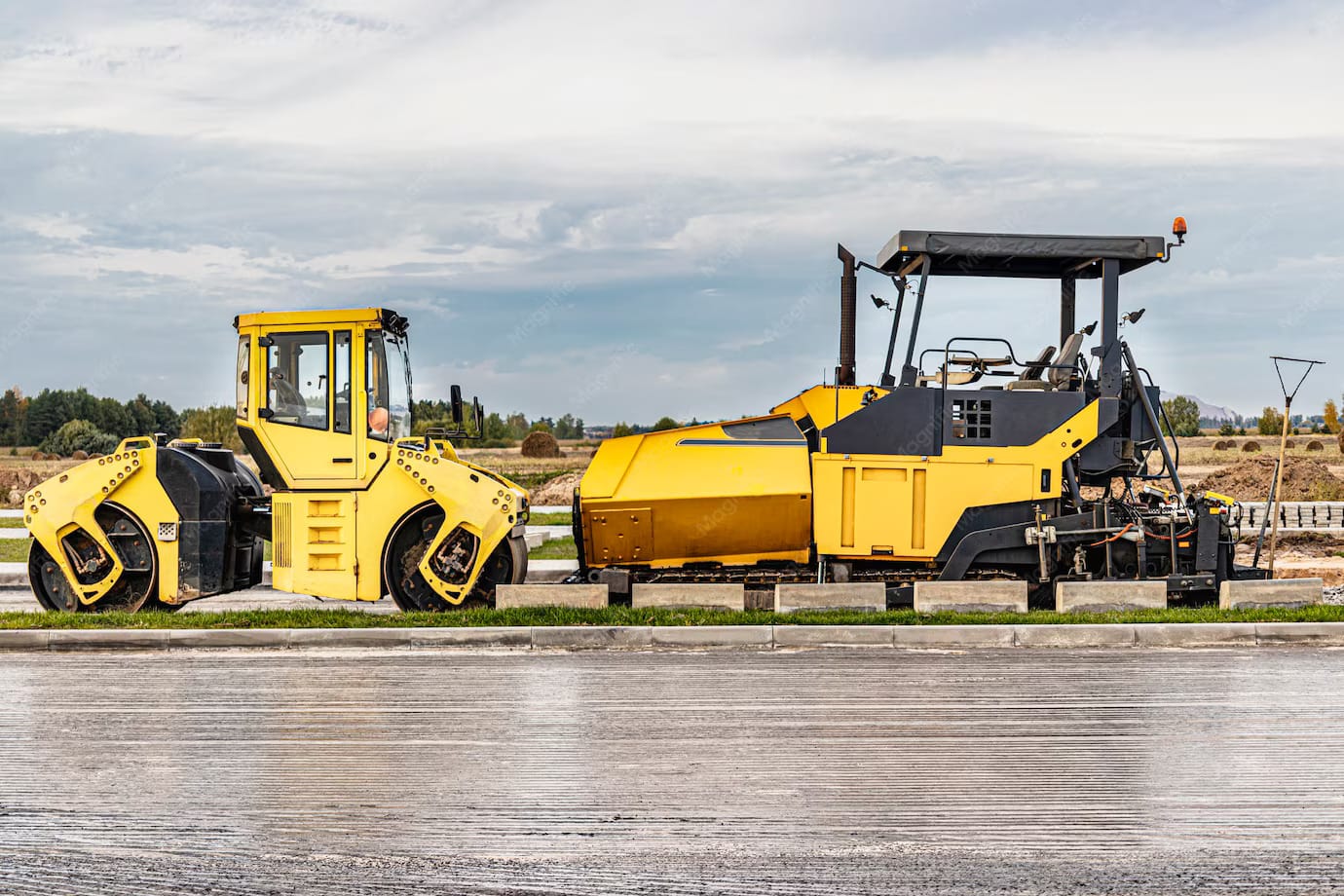
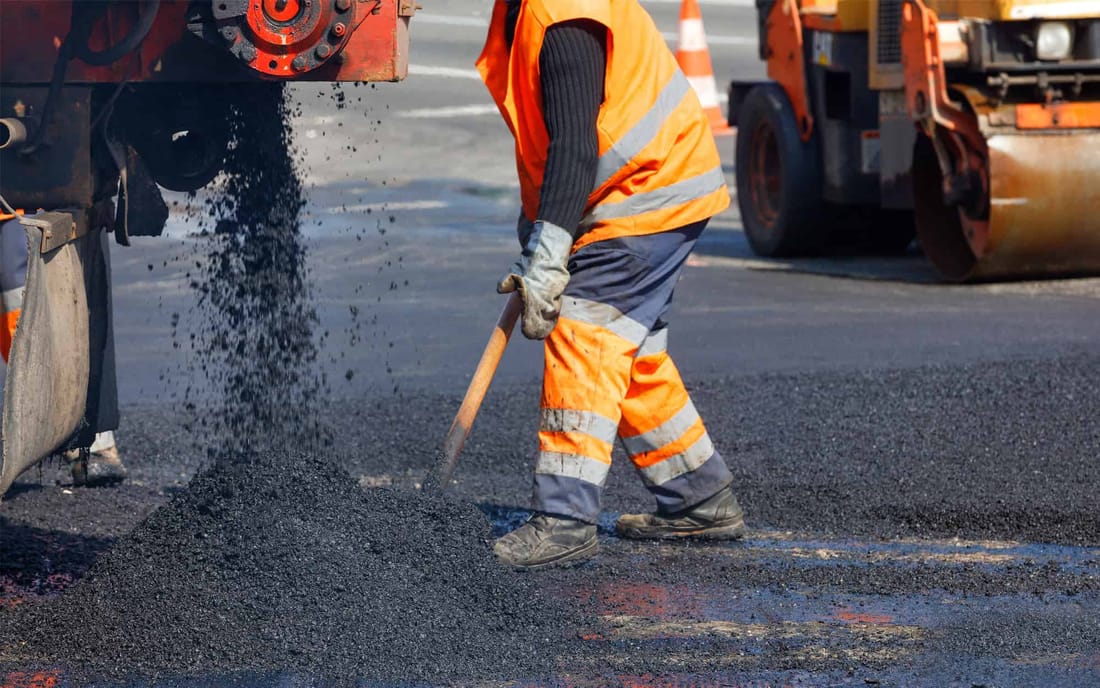
5. Asphalt placement: We place industrial pavements in multiple lifts using an asphalt paver, not just a skid steer spread. A typical heavy-duty section might be a 3 inch base lift with a coarser mix and a 2 inch surface lift with tighter gradation. Joints are staggered and compacted hot so they are not weak points under truck tires.
6. Compaction and quality checks: Industrial jobs get higher compaction targets than light-duty lots. We run steel drum and pneumatic rollers in a specific pattern to hit density numbers that prevent future rutting. We also check slopes, joint quality, and transitions to concrete to ensure forklifts and pallet jacks do not hit bumps.
Material and Design Options for Heavy-Duty Pavements
Not every industrial area on your property needs the same pavement thickness or mix design. Precision Asphalt Raleigh will usually break your site into zones and match the pavement to the impact of each zone.
Heavy truck lanes and loading areas: These get the strongest section. We may recommend a thicker stone base, a heavy-duty asphalt base mix, and a high-stability surface course. In Raleigh, we favor North Carolina DOT rated mixes for the heaviest use areas because they have proven performance under truck traffic on state roads.
Trailer and container storage yards: These areas see less movement but a lot of static weight. The risk is long-term rutting where trailers sit. We often use a slightly thinner asphalt section on top of a well-compacted, thicker stone base. Proper drainage and tight compaction under landing gear pads is critical here.
Light industrial parking and internal drives: Employee parking and light delivery areas can often be built with a lighter section, which controls cost without sacrificing performance. The trick is to clearly separate heavy-duty truck routes from car-only areas when we design the pavement.
Tie-ins to concrete: Many industrial sites in Raleigh have concrete dock aprons, dumpster pads, or fueling islands. If the transition to asphalt is not detailed correctly, the edge of the concrete will break or the asphalt will crumble. We use sawcut joints, proper base support at the edge, and often thicken the asphalt adjacent to concrete to handle that stress.
Surface options: For high turning areas like busy loading docks, we can specify polymer modified asphalt mixes that resist shearing and shoving. For industrial yards where appearance matters, such as distribution centers with frequent customer visits, we design the surface to accept future sealcoating without compromising heavy-duty performance.
Costs, Bids, and What Drives the Price in Raleigh
Industrial asphalt paving costs are driven by more than just square footage. Understanding the main cost factors will help you compare bids fairly.
Thickness and materials: The biggest driver is the total thickness of stone and asphalt. A yard that genuinely needs a 10 inch section will cost more than one that can perform with 6 inches, but underbuilding to win a low bid is what leads to early failure. We show our recommended section in inches for each area so you can see exactly what you are paying for.
Subgrade repairs: In the Raleigh area we see a lot of variable soils. Some old industrial sites were built on fill without proper compaction. If we have to undercut soft spots and import stone, that adds cost but prevents long term settlement and potholes. We try to identify these needs up front instead of hitting you with surprise change orders later.
Access and phasing: Working in an active distribution center or manufacturing plant requires phasing, night work, and sometimes weekend paving. That can increase cost because production is less efficient, but it protects your operations. We can show you alternate phasing plans and the cost difference for each so you can choose what fits your schedule and budget.
Drainage structures and concrete: If your project includes new storm inlets, trench drains, or concrete pads, those items are priced separately from straightforward asphalt square footage. Addressing drainage correctly during construction is almost always cheaper than trying to fix ponding and freeze-thaw damage after the fact.
When Precision Asphalt Raleigh provides a proposal, we spell out pavement sections by zone, base thicknesses, mix types, and any special details at docks, dumpsters, or gates. That way you can put our scope side by side with another bid and see if you are truly comparing equal designs, not just price per square foot.
Common Industrial Pavement Problems in Raleigh and How We Handle Them
Heavy-duty pavements around Raleigh tend to fail in predictable ways, especially on older sites that were not built for today’s traffic. Knowing what is going wrong helps you decide whether to patch, overlay, or rebuild.
Rutting in wheel paths: Deep grooves where trucks run indicate insufficient thickness, poor compaction, or a weak base. In critical lanes we rarely suggest simple overlays, since that often just hides the problem. A proper fix typically involves milling out the rutted areas, strengthening the base, then installing a thicker or higher-stability asphalt section in that lane.
Shoving at loading docks and gates: When trucks brake, accelerate, or turn tightly in front of docks or gates, the asphalt can shove and form ripples. We solve this with a combination of better mix selection, increased pavement thickness, and sometimes expanding adjacent concrete pads so the worst stresses occur on concrete instead of asphalt.
Edge failures along gravel shoulders: Many industrial yards have asphalt lanes beside gravel or bare soil. The pavement edge then breaks off under truck tires. Our repairs involve saw cutting back to solid material, rebuilding the base, and sometimes adding a paved shoulder or thickened edge so the lane can carry wheel loads without crumbling.
Water ponding and freeze-thaw damage: Even in central North Carolina, repeated wet-dry and occasional freeze cycles break down poorly drained pavements. We identify ponding areas, adjust slopes, raise low spots with proper asphalt lifts, and clean or modify drainage structures. For sites built decades ago under older stormwater rules, we can often improve pavement life significantly with relatively small drainage corrections.
What to Expect When You Hire Precision Asphalt Raleigh
Industrial and heavy-duty paving work requires planning so your trucks keep moving and your crew stays safe. Our process is transparent so you know what to expect from start to finish.
Pre-construction meeting: Before we mobilize, we sit down with your operations or facility manager to confirm phasing, working hours, truck routes, and safety requirements. For many Raleigh clients, we schedule work in off-shift windows or over weekends. We also clarify who on your side can approve field adjustments if we find unexpected subsurface issues.
Communication during work: You will have a single point of contact from Precision Asphalt Raleigh who can respond quickly when something on site changes. If rain is coming and we need to adjust the schedule, we tell you early. If we uncover a soft area larger than expected, we show it to you and discuss options and cost before moving forward.
Safety and access control: Industrial sites have different hazards than retail parking lots. We coordinate with your team on lockout zones, traffic control, and signage. We clearly mark closed areas and create temporary paths for employees, vendors, and emergency vehicles.
Final walk-through and maintenance plan: After paving, we walk the site with you to review joints, slopes, and transitions. We also suggest a realistic maintenance plan based on your traffic, which may include scheduled crack sealing in high-stress joints, periodic infrared repairs at dock areas, or long-term plans for partial lane overlays instead of full-yard replacements.
If you manage a distribution center, plant, or industrial yard in or around Raleigh and need pavement that can stand up to real-world loads, Precision Asphalt Raleigh can provide a design and installation that matches your actual conditions instead of a generic template.