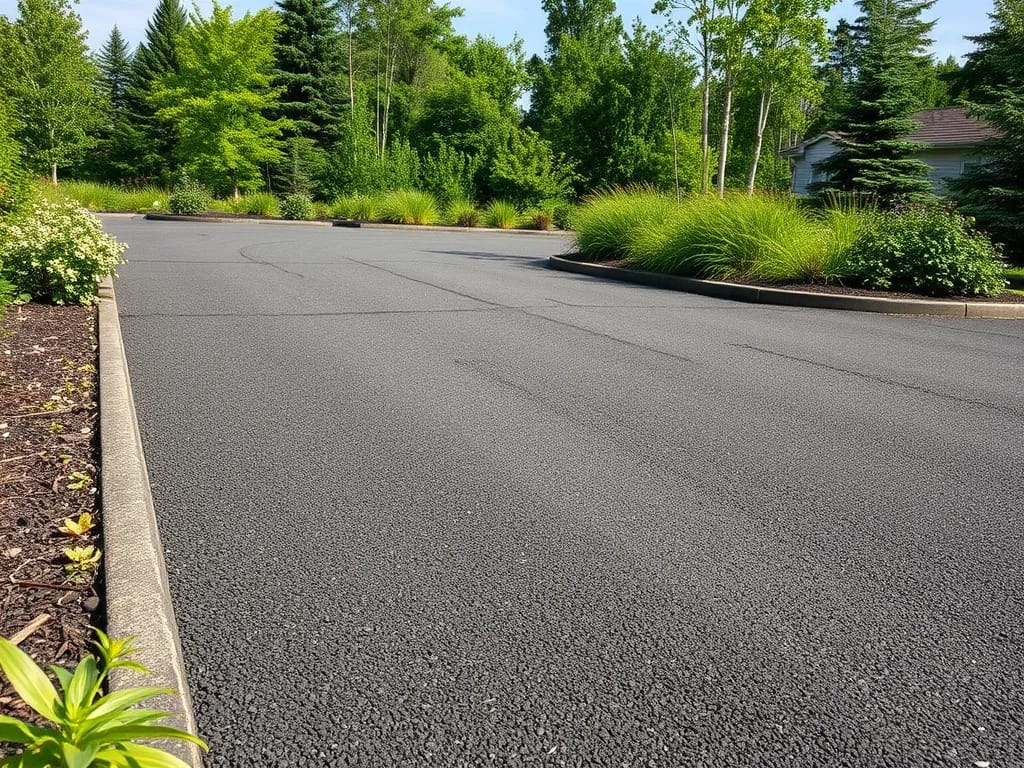
Home › Asphalt Pathways, Sidewalks, and Trails
Connect your site with smooth asphalt pathway paving in Raleigh, NC. We install sidewalks, greenway style trails, and multi use paths for pedestrians and cyclists. Our designs focus on accessibility, drainage, and durability so your paths stay safe and comfortable to use.
Precision Asphalt Raleigh provides professional asphalt pathway paving throughout Raleigh, NC, North Carolina and the surrounding area. Our licensed, insured crew delivers safe, clean, on-time work with a free estimate before anything begins. Call (984) 254-6287 or request your free quote.
Asphalt Pathways, Sidewalks, and Trails in Raleigh, NC
If you are planning a new asphalt pathway, sidewalk, or walking trail in Raleigh, you need more than just a good price. You need a surface that drains correctly in our heavy summer storms, stands up to tree roots, and still looks clean and welcoming years from now. Precision Asphalt Raleigh focuses specifically on these details for residential neighborhoods, commercial sites, schools, and HOA common areas across Wake County.
Our team works on everything from short front-walk replacements in older inside-the-beltline neighborhoods to mile-long community trails in newer developments around North Raleigh and Knightdale. We understand the mix of soil types in this area, the way pine needles and oak leaves collect on paths, and how ice can form in shaded sections near creeks and greenways. All of that affects how we design and build your asphalt pathway paving so it stays safe and smooth.
On every project we start with a site walk and questions about who will use the path: daily pedestrians, joggers, strollers, wheelchairs, bicycles, or light maintenance vehicles. That use determines path width, asphalt thickness, and edge support. Precision Asphalt Raleigh then designs a custom cross section (stone base, asphalt layers, and drainage plan) instead of using a one-size-fits-all walkway detail.
How We Plan Your Pathway, Sidewalk, or Trail
A good asphalt pathway in Raleigh starts with careful planning around grades, water, and trees. First we shoot elevations to see how water already moves across your property. In many Raleigh yards and commercial sites, there are low spots that stay damp after storms. Placing a pathway in those areas without correction leads to soft spots and premature cracking, so we may adjust alignment slightly or install additional stone and drains.
Next we set the path alignment. For a backyard or HOA path, we usually mark it with paint and flags so you can walk it and confirm it feels natural and avoids key trees. Around large oaks, we may gently curve the path instead of cutting straight through root zones. In some cases we recommend a slightly raised path on added stone so we do not have to cut major roots at all.
Once the layout is agreed on, Precision Asphalt Raleigh specifies the section. A lighter duty sidewalk that will only see foot traffic might use a 4 to 6 inch compacted ABC stone base with a single 2 to 2.5 inch asphalt layer. A greenway-style trail that needs to carry maintenance carts or small utility vehicles typically gets an 8 inch or thicker stone base plus two asphalt lifts (a base course and a finer surface course) for extra durability.
Our Asphalt Pathway Paving Process, Step by Step
When it is time to build, we follow a consistent process that keeps your site organized and safe.
1. Site preparation and demolition: We remove existing broken concrete, brick, or asphalt if needed, then strip vegetation and topsoil along the path alignment. In many Raleigh neighborhoods with older concrete sidewalks, we sawcut the edges cleanly so transitions to remaining sections are neat and trip free.
2. Grading and subgrade work: Using small graders or skid steers, we grade the subgrade to our design elevations, creating a gentle cross slope so water sheds off the path instead of pooling. In areas with softer clay or near creek banks, we may undercut a few extra inches and replace poor soil with compacted stone to prevent future settlement.
3. Stone base installation: We place ABC stone (crushed aggregate commonly used in North Carolina) in layers, compacting each pass with vibratory rollers or plate compactors in tight spaces. We check thickness and firmness across the path, paying special attention to transitions at driveways, curb ramps, and street crossings.
4. Edge support: For many pathways, particularly in yards or wooded areas, we recommend some form of edge control. This can be additional stone shoulders, compacted soil berms, or concrete ribbon edges. Edge support keeps the asphalt from raveling at the sides as people step or roll off the path.
5. Asphalt paving: We install hot mix asphalt while it is still at the right temperature for compaction. On wider paths we use a small paver machine for a very smooth finish. On narrow or curved sections we may place by hand with experienced rakers, then compact with a roller to a uniform density.
6. Final rolling and cleanup: Once compacted, we check joints and edges, feather transitions, and clean up loose stone from adjacent lawns or planting beds. Most pedestrian-only paths can be walked on within 24 hours, although we usually suggest a cautious first day while the surface cools and firms.
Design Options and Finishing Touches for Walkways and Trails
Asphalt might seem simple, but there are several ways to make your pathway or sidewalk look and function better for your specific site in Raleigh.
Surface texture: For most pedestrians, a standard dense graded asphalt provides a smooth but not slippery surface. In shaded or damp areas, such as paths along Crabtree Creek or behind buildings with little sun, we may recommend a slightly more textured surface mix for better traction in wet conditions.
Width and layout: Home walkways often range from 4 to 6 feet wide, which comfortably fits two people walking side by side or a stroller. Community trails and school walkways often start at 8 feet so pedestrians and bikes can pass each other without stepping off the pavement. Sharp corners are avoided when possible to reduce scuffing from bikes and carts.
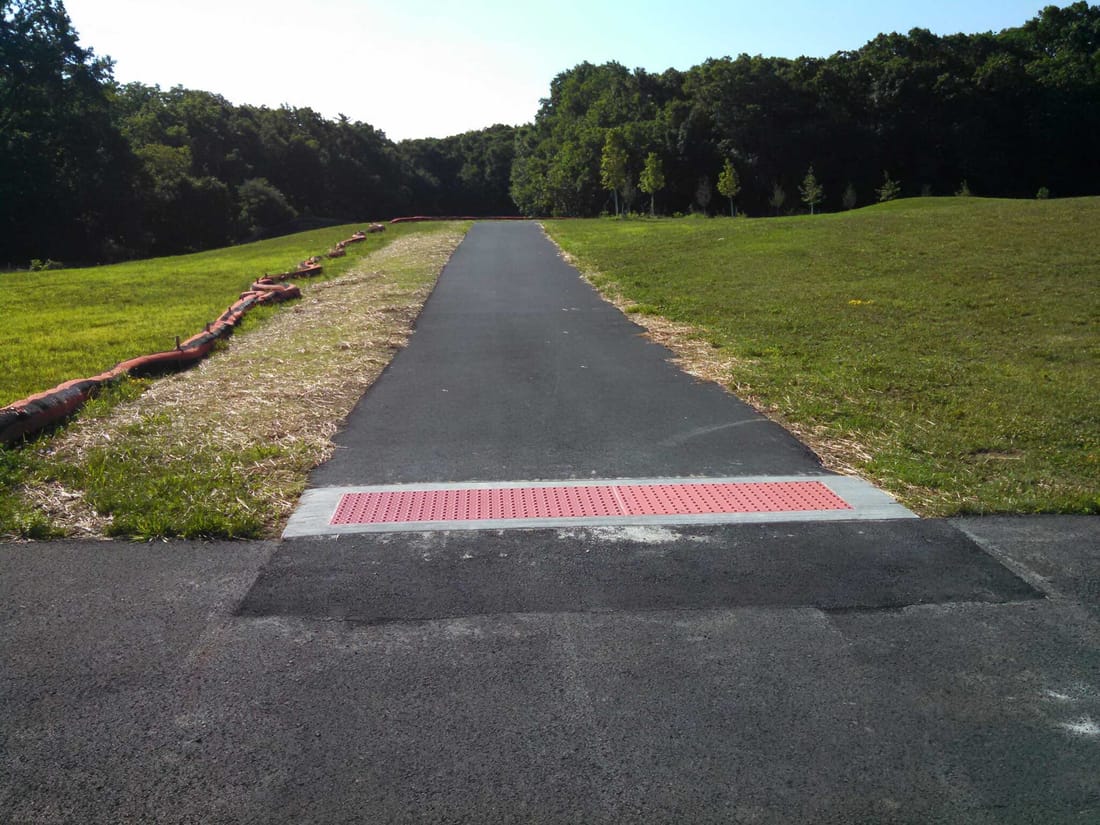
Borders and transitions: We can add concrete or brick bands at entry points, crosswalks, or intersections to signal a change in space. At driveways and street crossings, we pay close attention to Americans with Disabilities Act (ADA) guidelines so slopes are gentle, joints are smooth, and curb ramps align correctly. This is especially important around medical offices, churches, senior living communities, and schools in Raleigh.
Drainage features: Where a path crosses a swale or ditch, we can install culvert pipes and build the path over them, or slightly raise the pathway above grade with stone so water can move under or around without undermining the asphalt. In long low areas, we might add small drop inlets and underground pipe to keep surface water away from the pavement edge.
Costs, Lifespan, and Common Raleigh-Specific Issues
Several factors drive the cost of asphalt pathway paving in Raleigh, and understanding them helps you compare proposals fairly. Length and width are the obvious ones, but base thickness, required drainage work, and site access often have an equal or larger impact on price. For example, a path that we can reach easily with trucks and rollers will cost less per foot than one that requires smaller equipment and material to be moved through narrow gates or between buildings.
Tree roots are one of the biggest long-term challenges in Raleigh, especially in older neighborhoods like Five Points, Oakwood, and parts of Cary and Garner. Large oaks and maples can push up any pavement over time. Precision Asphalt Raleigh addresses this by adjusting alignments where possible, thickening the stone base in critical zones, and sometimes installing root barriers or using a slightly flexible asphalt section that can tolerate minor movement better than rigid concrete.
Water is another key issue. Our heavy thunderstorms and hurricane season can quickly reveal where a pathway design was not thought through. To avoid ponding and erosion, we design cross slopes of about 1.5 to 2 percent, ensure positive drainage to lawn or swales, and avoid trapping water against building foundations or fences. In clay-heavy yards, we may recommend French drains or underdrains beneath or beside the path so water has somewhere to go.
With proper design and maintenance, an asphalt pathway in Raleigh typically provides 15 to 25 years of service before needing major resurfacing. Occasional sealing and quick crack repairs can extend that life further. We walk our clients through a realistic maintenance plan based on shade patterns, traffic levels, and nearby vegetation so you know what to expect long after the paving trucks are gone.
What to Expect When You Work With Precision Asphalt Raleigh
Working with Precision Asphalt Raleigh on an asphalt pathway, sidewalk, or trail project is meant to feel straightforward, not stressful. We start with a site visit where we listen to what you want the path to do, whether that is giving kids a safe route to a backyard play area, creating a smooth loop around a community pond, or tying multiple building entrances together for ADA compliant access.
We then provide a written proposal that explains scope, thicknesses, and any drainage or tree-related work in plain language, not just line items. If you are comparing multiple bids, we are happy to explain how base depth, mix type, or edging details differ so you are not just choosing by total price.
During construction, we coordinate access with you to limit disruption. For schools and businesses, we can schedule major phases during off hours or breaks. For HOAs, we can provide notices for residents that explain when certain sections will be temporarily closed.
After the work is complete, we walk the path with you, review any special care instructions for the first few days, and point out key features like drainage paths and edge supports. Our goal is that you understand exactly how your new asphalt pathway paving was built and how to keep it in good shape, so it serves your property and the people who use it for many years.