Home › Commercial Asphalt Resurfacing & Overlays
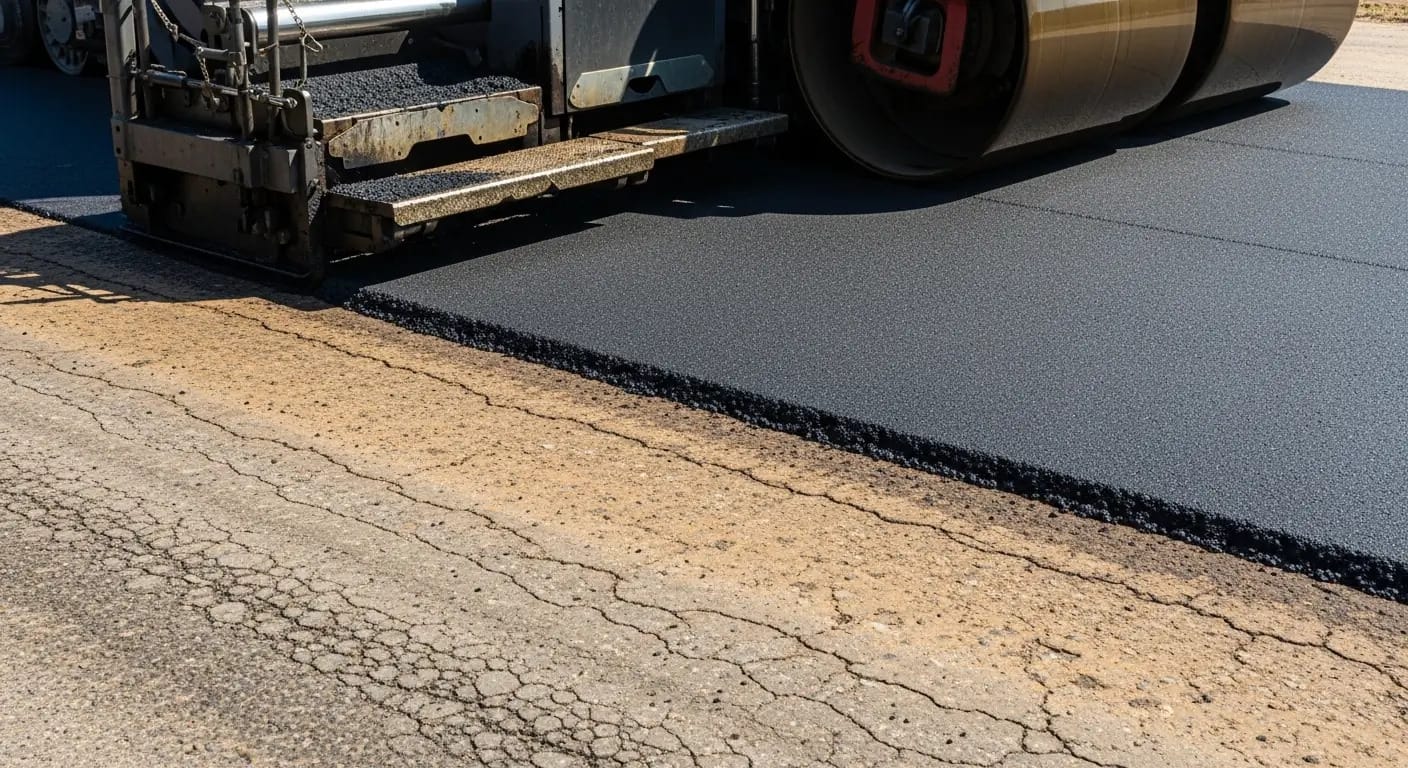
Renew aging pavement with commercial asphalt resurfacing in Raleigh, NC. We provide overlays and mill and overlay solutions for parking lots, drives, and private roads. By keeping the base intact and installing a new asphalt layer, you gain a smooth surface at a lower cost than full reconstruction.
Precision Asphalt Raleigh provides professional commercial asphalt resurfacing throughout Raleigh, NC, North Carolina and the surrounding area. Our licensed, insured crew delivers safe, clean, on-time work with a free estimate before anything begins. Call (984) 254-6287 or request your free quote.
Commercial Asphalt Resurfacing for Raleigh Parking Lots & Private Roads
If you manage a shopping center, office park, church, school, or industrial site in Raleigh, you do not always need a full tear out to fix worn asphalt. Commercial asphalt resurfacing and overlays can restore a failing lot or private street by installing a new structural layer on top of the existing pavement. Precision Asphalt Raleigh focuses on this type of work for commercial properties across Raleigh, Cary, Garner, and the surrounding Wake County area.
In practical terms, resurfacing makes sense when your asphalt has widespread cracking, raveling, or standing water but the base underneath is still solid. We typically see good candidates in lots that are 10 to 18 years old, with regular traffic but limited heavy truck loading, such as medical offices along Six Forks, strip centers along Capital Boulevard, and mid sized apartment complexes built in the 1990s and 2000s. If the base has failed or you have deep structural problems, we will tell you that up front and explain why resurfacing alone would not last.
Our goal is to give you a realistic picture of what resurfacing will do, how long it will last for your type of property, and where an overlay fits into your long term maintenance plan. That way you can budget intelligently and avoid throwing money at short term patchwork that will not hold up to Raleigh weather and traffic.
How Commercial Asphalt Resurfacing & Overlays Are Actually Done
A proper commercial asphalt resurfacing project is not just spreading a thin coat of blacktop over what you already have. Precision Asphalt Raleigh follows a specific sequence so your overlay bonds well and drains correctly.
First, we walk the site with you and mark all structural problems. This includes potholes, alligator cracking, settled areas at dumpster pads, and places where trucks have twisted the pavement at drive entrances. Any spot that is broken down through the full asphalt depth is saw cut and removed, then replaced with new base asphalt. If the stone base underneath is soft, we repair or add stone and compact it before paving.
Next, we tackle drainage and grading. Raleigh gets intense summer storms, and many older commercial lots were built before current drainage standards. We use a 10 foot straightedge and laser levels to find low spots where water ponds after rain. Shallow birdbaths are milled or shimmed with asphalt leveling courses. We check slopes toward catch basins and curb inlets, which is critical in flat areas like much of North Raleigh and the warehouse districts around I 440.
We then mill or grind transitions at tie in points such as entrances from public streets, dumpster pads, and ADA accessible areas. Milling prevents abrupt height changes that can cause trip hazards or create a lip at the gutter line. On some projects, we perform full profile milling in the drive lanes so the finished overlay height matches existing curb reveal.
After repairs and milling, we clean the surface thoroughly with power brooms and blowers so new asphalt can bond to old. We apply a tack coat, a thin asphalt emulsion sprayed over all existing pavement and edges. This tack is what actually glues the overlay to the old surface and is not optional if you want the new layer to stay in place.
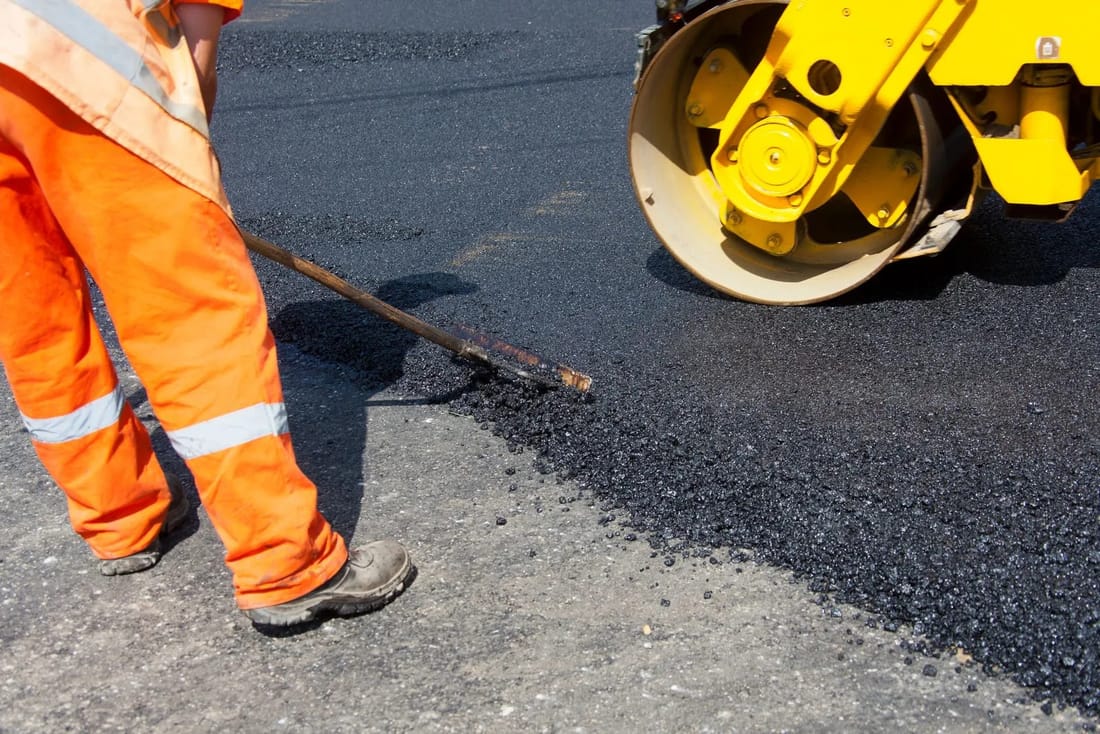
Finally, we install the overlay using commercial pavers, not hand tools, in all main traffic areas. For most Raleigh commercial work we use an NC DOT approved surface mix, typically in the 1.5 to 2 inch range for parking areas and up to 3 inches for heavy drive lanes or truck routes. Steel drum rollers and pneumatic tire rollers compact the new asphalt to the right density. We then cut and seal joints at tie in points, stripe the lot to current ADA standards, and set up appropriate cure time before you reopen to traffic.
Material Options, Overlay Thickness, and Design Choices
The mix and overlay thickness you choose affect cost and how long the new surface will last. Precision Asphalt Raleigh helps you match the design to how your property is actually used instead of guessing or pushing a one size fits all solution.
For light duty parking serving offices, banks, and medical practices, a 1.5 inch surface course of fine graded asphalt is usually sufficient. It provides a smooth finish that looks good, drains well, and handles passenger cars. For mixed use lots that see delivery trucks, service vehicles, or bus traffic such as schools and churches, we often recommend 2 inches in drive lanes and at entrances, with 1.5 inches in interior parking bays to control cost.
Heavier industrial or retail sites like distribution centers or big box stores with frequent tractor trailer loading may need a different approach. We might install a leveling course to correct rutting, then add a 2 to 3 inch overlay in loading zones and drive aisles. Dumpster pads and fuel delivery areas sometimes get reinforced asphalt or concrete to handle spinning tires and parked loads.
Line striping and layout can also be updated during resurfacing. Many older Raleigh properties were originally striped with narrower spaces or non compliant accessible routes. When we resurface, we can adjust stall width, add or relocate ADA accessible parking, and improve traffic flow at pinch points. For multi building office parks and HOA roads, we can add stop bars, directional arrows, and crosswalks that match current use patterns rather than the original 1980s site plan.
If you need high visibility markings, we can use higher build striping paint or add reflective beads in key locations. For properties concerned about heat and light, such as daycare centers or senior communities, we can discuss sealing options and color choices that balance appearance with practicality in our hot, humid summers.
What Drives the Cost of Commercial Asphalt Resurfacing in Raleigh
Owners and property managers want to know why one resurfacing quote might be thousands of dollars higher or lower than another. There are several real cost drivers on a commercial asphalt resurfacing job in Raleigh, and it helps to understand them before you compare numbers.
The first big factor is how much base and patch work is required before the overlay goes down. A lot that only needs skin patching and limited full depth repairs will cost less than a site with widespread base failures and underground issues. Shopping centers built on poorly compacted fill, often found along older corridors like New Bern Avenue and Western Boulevard, usually require more undercutting and stone replacement.
The second factor is overlay thickness and the total square footage. A 1.5 inch overlay uses significantly less asphalt than a 2 or 3 inch section, and asphalt is typically priced by the ton. If your lot has areas of heavy truck traffic, we may suggest thicker sections there, which adds cost but prevents premature rutting. Phasing can spread this cost over multiple budget years by resurfacing the most critical sections first.
Access and phasing also influence price. A site that can be closed in large sections allows our crews to pave efficiently and reduces labor and equipment time. Busy medical offices, retail centers, and apartment complexes often require night or weekend work, tight phasing, and traffic control that increase cost but keep your tenants and customers moving. We plan this with you in advance, including signage, barricades, and temporary access routes.
Another driver is ADA compliance work that must be corrected when you resurface. If your existing slopes, ramps, or accessible stalls are not up to current standards, it is usually best to address those during resurfacing. This can involve additional milling, concrete ramp work, and re striping, which all impact the bottom line but also reduce your liability.
Precision Asphalt Raleigh itemizes these elements in our proposals. Instead of one lump sum with no explanation, you see how much is tied to patching, overlay thickness, milling, striping, and optional upgrades so you can make informed decisions.
What Raleigh Property Owners Should Check Before Hiring
Before you hire anyone for commercial asphalt resurfacing, it helps to look beyond the square foot price. The cheapest proposal often skips critical steps and that usually shows up as early cracking or separation within a few years. There are several specific points Raleigh owners and managers should verify.
Ask how the contractor plans to evaluate and repair the base. If they only talk about overlay thickness and not about full depth patching where needed, that is a red flag. On older properties in Raleigh, especially those with patchwork utility cuts or settled trenches, base repair is often the difference between a 3 year fix and a 10 plus year solution.
Confirm what milling and leveling is included. Any responsible overlay project should address gutters, entrances, and transitions at sidewalks and ADA routes. If transitions are not milled or leveled, you can end up with puddles along the curb line or trip hazards at ramps. Have the contractor point out on a site map where they plan to mill and how they will restore proper drainage.
Ask exactly what asphalt mix will be used and how thick it will be in different parts of the property. For example, the traffic circle at an apartment entrance may need more structure than the back row of overflow parking. Precision Asphalt Raleigh typically specifies mix types similar to what NC DOT uses on local roads, which are designed to handle our climate and traffic. This is especially important in our freeze thaw periods and during hot spells that can exceed 95 degrees.
Get a clear plan for phasing, traffic control, and communication with your tenants or occupants. For multi tenant retail and medical sites, we frequently provide a phasing map you can email to tenants, along with suggested notices so customers know what to expect. We coordinate around delivery schedules, peak office hours, and school calendars to limit disruption.
Finally, check that the contractor is insured, familiar with local codes, and experienced with commercial overlays rather than just small residential driveways. Ask for local references for properties similar to yours. Precision Asphalt Raleigh can point you to completed resurfacing projects at office parks, churches, and multifamily communities throughout the Raleigh area so you can see how the work holds up over time.